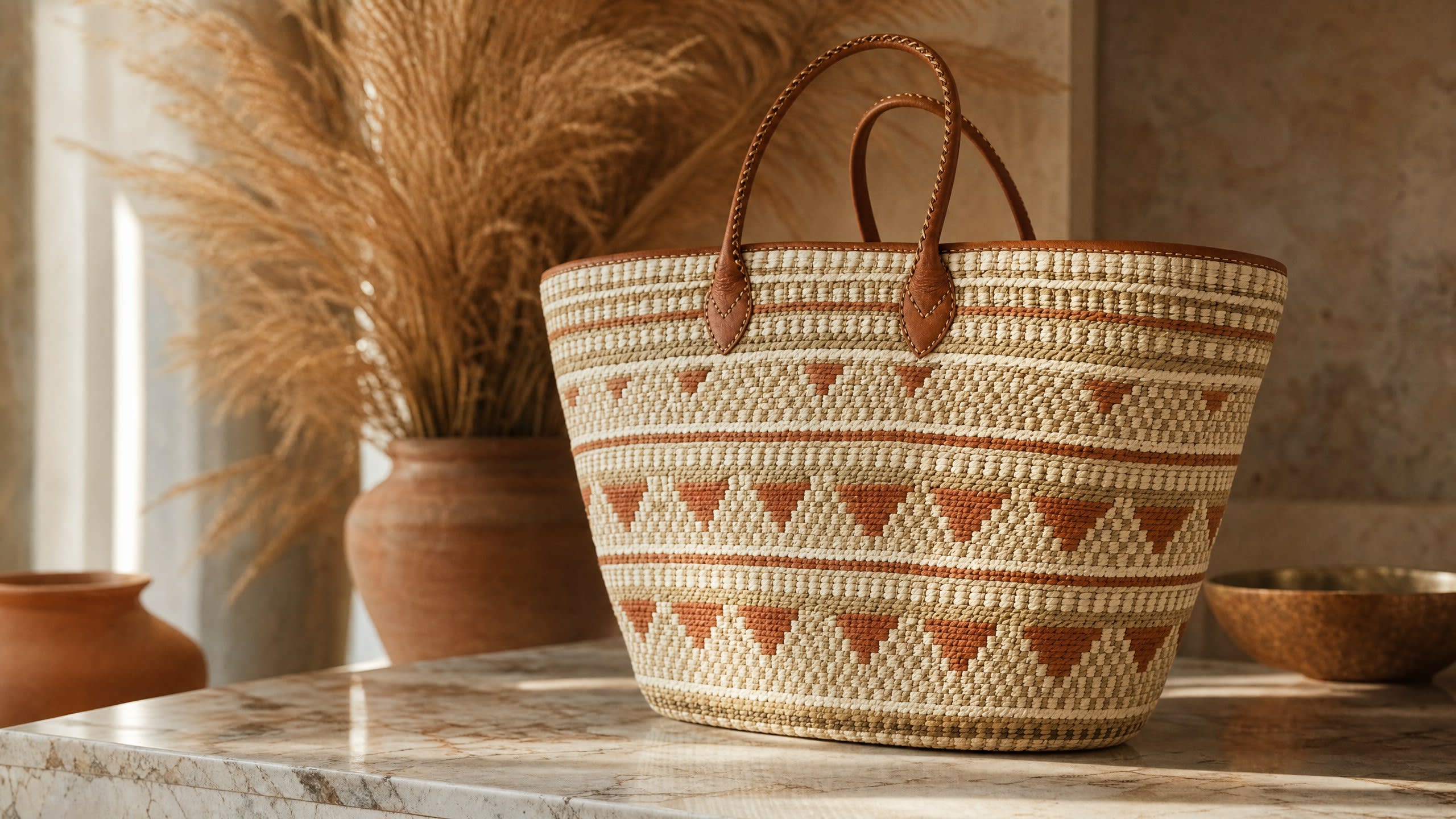


Behind every handwoven Tunisian basket are two humble, remarkable plants: the date palm and esparto grass, known locally as halfa. Together they give the couffin its strength, its soft golden colour and its faint, sun-dried scent. Understanding them is the first step to appreciating — and caring for — your piece.
Palm leaf — soft, golden, flexible
Strips of dried date-palm leaf are the most common material for the couffin. Palm is light and pliable, which makes it ideal for the wide, comfortable weave of a market bag or a storage basket. Its pale, warm tone deepens gently with age and handling.
Esparto (halfa) — tough and structural
Esparto grass grows wild across Tunisia's high plains and has been woven for thousands of years. It is denser and more rigid than palm, which makes it perfect for pieces that need to hold their shape — trays, structured baskets and bread baskets. Esparto is also remarkably hard-wearing, which is why some Tunisian esparto goods outlive their makers.
Which should you choose?
There is no better or worse — only different jobs. Choose palm for soft, flexible bags and gentle storage; choose esparto for structure, trays and pieces that stand on their own. Many of the finest baskets combine both, pairing a palm body with esparto reinforcement and leather trim.
Whatever the fiber, the rule is the same: keep it dry, and it will serve you for years.
Bring a piece of Tunisia home
Every couffin and basket is handwoven by Tunisian artisans and shipped worldwide.
Shop the collection