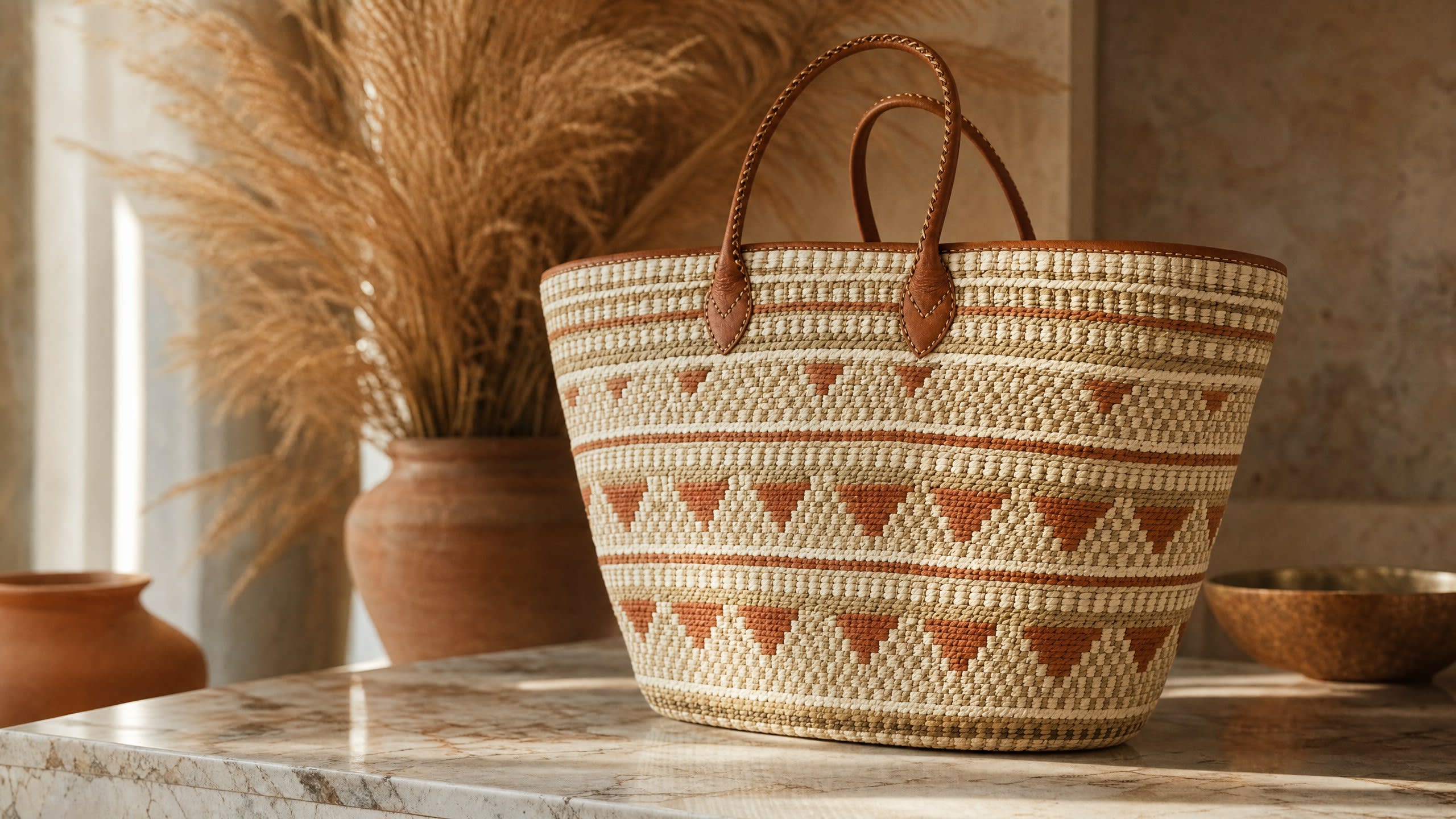


Ask for a Tunisian basket and you are really asking for dozens of distinct traditions. Across the country, the craft of weaving palm and esparto has taken on a regional character — shaped by the plants that grow nearby, the climate, and generations of local know-how. To understand a couffin is to understand where it comes from.
Nabeul — the palm coast
On the Cap Bon peninsula, the town of Nabeul is famous for its pottery and its palm. Here, date-palm leaf is woven into the soft, golden couffins most people picture when they think of a Tunisian basket — light, generous and perfect for the market or the beach.
Djerba — island weave
On the island of Djerba, weaving sits alongside a long textile tradition. Island baskets often show a tighter, more decorative weave, and the craft is deeply woven into daily and ceremonial life — baskets for bread, for storage, for weddings and gifts.
The south — esparto country
In the high plains and oases of Tunisia's south, esparto grass (halfa) grows wild and hardy. Southern artisans coil and stitch it into some of the country's most durable pieces — structured baskets and trays built to survive a harsh climate and decades of use.
Every Gamra piece carries a little of this geography with it. When you buy a handwoven couffin, you are not buying an anonymous object — you are buying a place, a plant and a pair of hands.
Bring a piece of Tunisia home
Every couffin and basket is handwoven by Tunisian artisans and shipped worldwide.
Shop the collection